When should you replace your sump pump? (Hint: not when it fails)
If your sump pump fails during a storm, your basement floods. Here's how to know it's tired before that happens — for Frederick County homes.
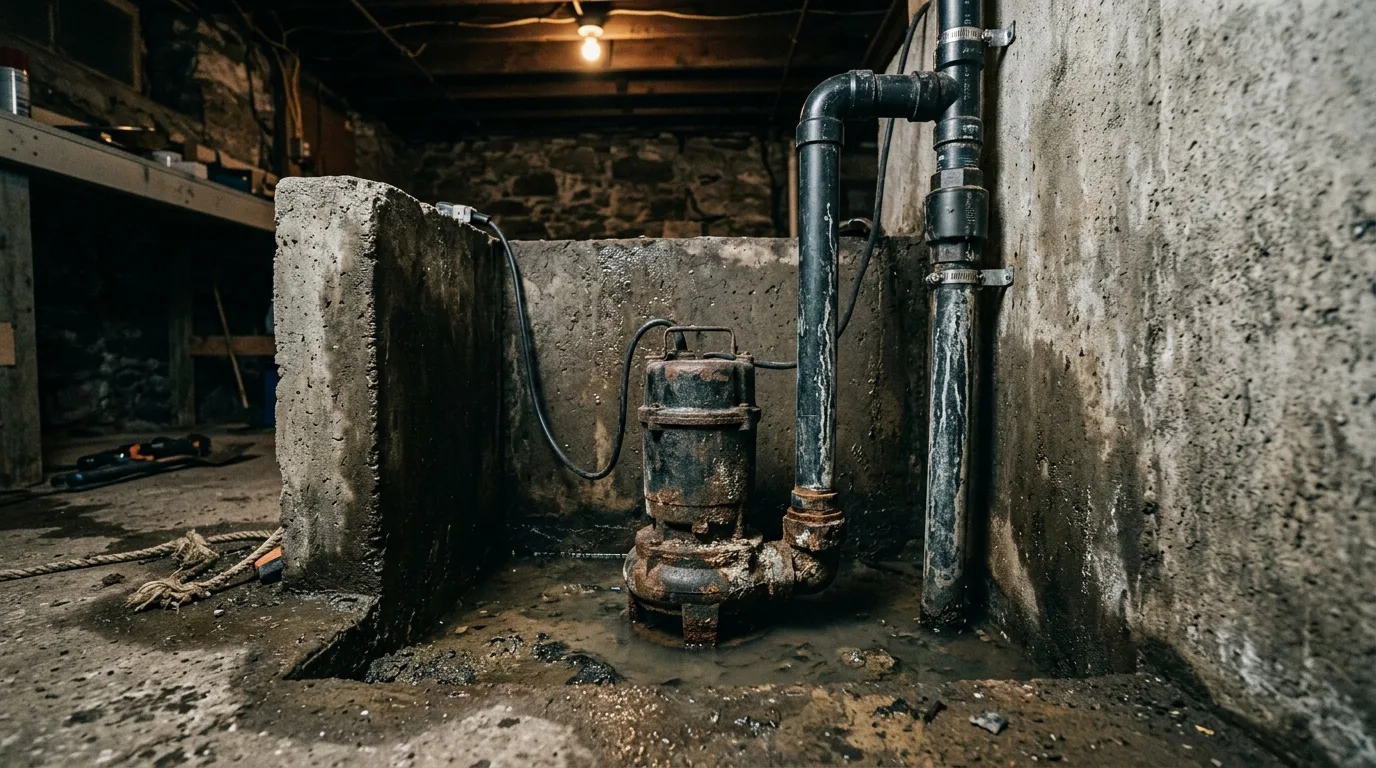
Most basement floods we see happen during a heavy rain — the same storm that knocked the power out. The sump pump didn’t fail because of the storm. It failed because it was tired, and the storm exposed it.
If you have a basement in Middletown, Walkersville, or any of the lower areas of Frederick County, this is the post for you.
How long should a sump pump last?
A primary sump pump that runs occasionally lasts 7–10 years. A pump that runs often (high water table, poor exterior drainage) might only last 3–5 years. Battery backup units should be load-tested annually and replaced every 5 years regardless of how often the system runs them.
Most homeowners discover their pump is dead right when they need it. We’d rather you discover it on a sunny day in June.
Signs yours is on the way out
Listen and look:
- Constantly cycling — short on/off bursts mean a stuck float or a failed check valve
- Running for a long time without draining — the impeller is worn or the discharge is clogged
- Loud grinding, rattling, or buzzing — bearings or a jammed impeller
- Vibration that wasn’t there before — motor mount or impeller balance is off
- Visible rust on the pit, pump body, or check valve — moisture infiltration where it shouldn’t be
- Water in the pit but the pump isn’t running — float or switch failure
- It’s just old — over 7 years and you don’t know, replace it
Test it yourself, before the storm
Pour a 5-gallon bucket of water into the pit. The pump should:
- Kick on within a few seconds
- Pump the pit nearly empty
- Shut off cleanly without short-cycling
- Stay off until water rises again
If any of those steps look wrong, call us before the next thunderstorm.
Battery backup — the part homeowners skip
A primary sump pump on AC power is helpless during a power outage. Most floods we respond to are exactly this: storm rolls through, power goes out, sump can’t run, basement fills. A battery backup pump is plumbed in parallel and runs on a sealed lead-acid or lithium battery for 6–24 hours, depending on size and runtime.
For most homes in Frederick County, a battery backup is not optional — it’s the difference between a wet basement and a flooded one.
What we install
For most basements:
- Primary: 1/3 HP cast-iron submersible (Zoeller M53/M267 or equivalent)
- Backup: Battery system with sealed AGM battery, sized for at least 12 hours of runtime
- Discharge: PVC running outside, sloped away from the foundation, with a freeze-protected discharge end
For Middletown Valley homes and other high-water-table situations, we’ll often size up to a 1/2 HP primary and a heavy-duty backup.
Don’t wait for the failure
Sump pump replacement is a calm, scheduled appointment that takes about an hour. Sump pump failure during a storm is a call to a flooded basement, a wet drywall remediation crew, and probably a deductible. Schedule a sump checkup and we’ll tell you straight whether yours has another season in it.