Frozen pipes in Frederick County: prevention and what to do when it happens
Cold snaps in Frederick MD freeze pipes every winter. Here's how to prevent it — and what to do if you wake up to no water.
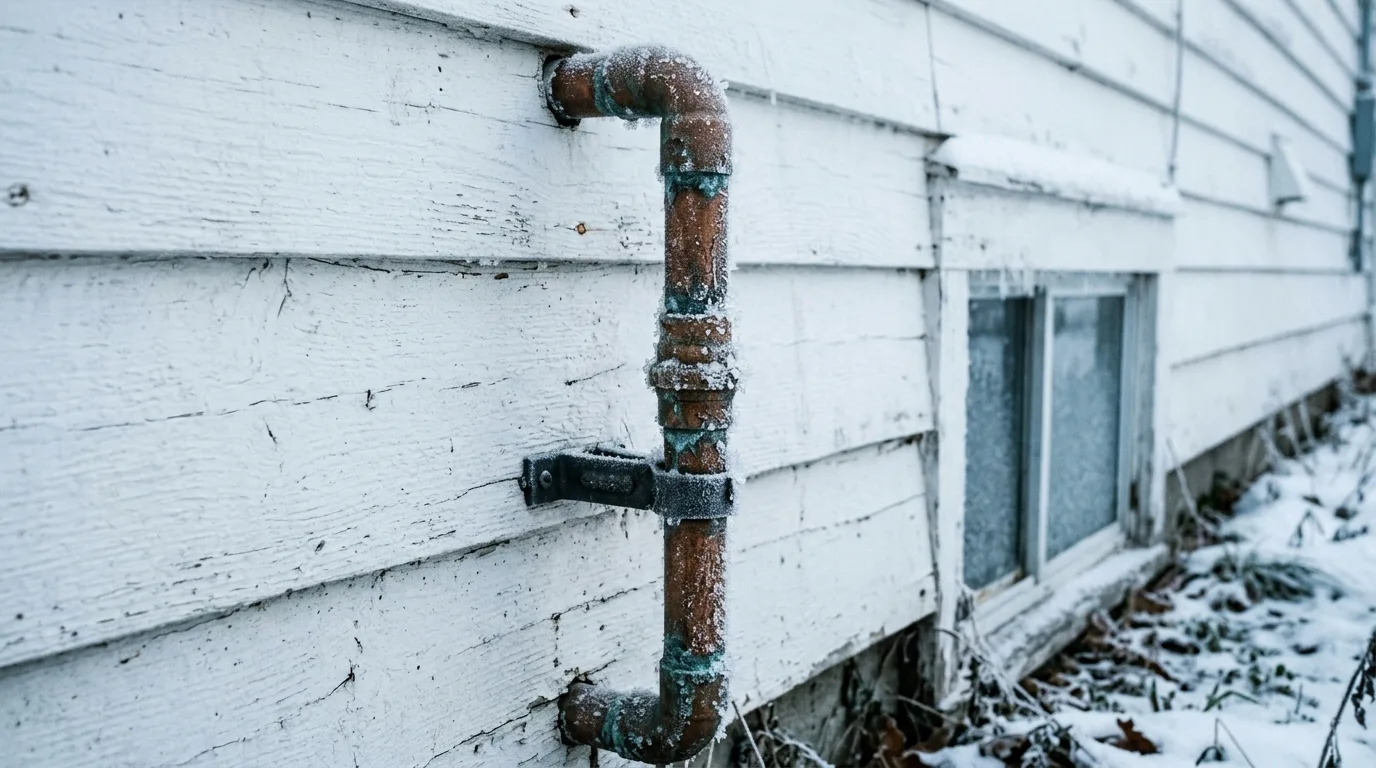
Frederick County winters bring a few brutal cold snaps every year. When temperatures drop into the single digits — especially with wind — pipes freeze, and pipes that freeze hard enough split. A 1/8” split in a 1/2” supply line can dump 250 gallons into your drywall in an hour.
This is the post we wish every homeowner in our service area would read in November.
What freezes first
In order:
- Outdoor hose bibs that weren’t drained or covered
- Pipes in unconditioned crawlspaces (older homes, especially Brunswick and historic Frederick)
- Pipes in exterior walls behind kitchen and bathroom sinks on north-facing walls
- Pipes in the garage if the garage is plumbed
- Lines feeding bathrooms over unheated bonus rooms (more common than you’d think in newer Urbana construction)
Prevention — the cheap stuff first
Disconnect outdoor hoses. This is the single highest-ROI thing you can do. A frost-free hose bib only works if no hose is attached.
Cover hose bibs. Foam bib covers are $3 each at any hardware store.
Drip the cold water tap on the coldest night. Pencil-thick stream from the faucet farthest from the main. This works because flowing water doesn’t freeze easily AND because it relieves the pressure that actually splits a pipe.
Open cabinet doors under sinks on exterior walls. Lets house heat reach the pipes.
Set the thermostat no lower than 55°F if you’re traveling. Lower than that and you’re betting the house.
Insulate exposed pipes. Foam pipe insulation is cheap and easy on accessible runs in the basement, crawlspace, and garage.
What to do if you wake up to no water
- Shut off the main water supply. Find your shutoff before you need it — it’s usually where the supply enters the basement or in a meter pit near the curb. Knowing this in November is a gift to yourself.
- Open every faucet in the house, hot and cold, to relieve pressure.
- Locate the freeze. Frost on the pipe, very cold to touch, no water flowing. Common spots: under cabinets on exterior walls, in the crawlspace, in the garage.
- Thaw it slowly. Heat the area with a hair dryer or a small space heater pointed at the pipe — never with an open flame. Start at the faucet end and work back toward the freeze.
- Watch for a split. As the ice thaws, water will flow — if there’s a split, water will come pouring out somewhere. Be ready to shut off again.
- Call us. If you find a split, or you can’t locate the freeze, or anything looks wrong — call. This is what our after-hours line is for.
What you should never do
- Use an open flame (propane torch, lighter) to thaw a pipe. We see fires every winter from this.
- Leave a frozen pipe to “thaw on its own” without shutting off the main. You’re playing the lottery.
- Pour boiling water on a frozen pipe. The thermal shock can split a pipe that the freeze didn’t.
After it happens once, fix the cause
Pipes don’t freeze randomly. If a line froze this winter, it’ll freeze again next winter unless you address the cause: insulation, heat tape, rerouting, or a recessed spigot. We do all of these — and we’d rather come out in October to prevent than in January to repair.